Understanding Japanese Language Levels for Jobs in Japan
When searching for jobs in Japan as a foreigner, one of the biggest questions is: "How much Japanese do I actually need?" The answer varies widely depending on the role, company, and industry.
We've categorized jobs into three Japanese proficiency levels to help you quickly identify opportunities that match your language skills.
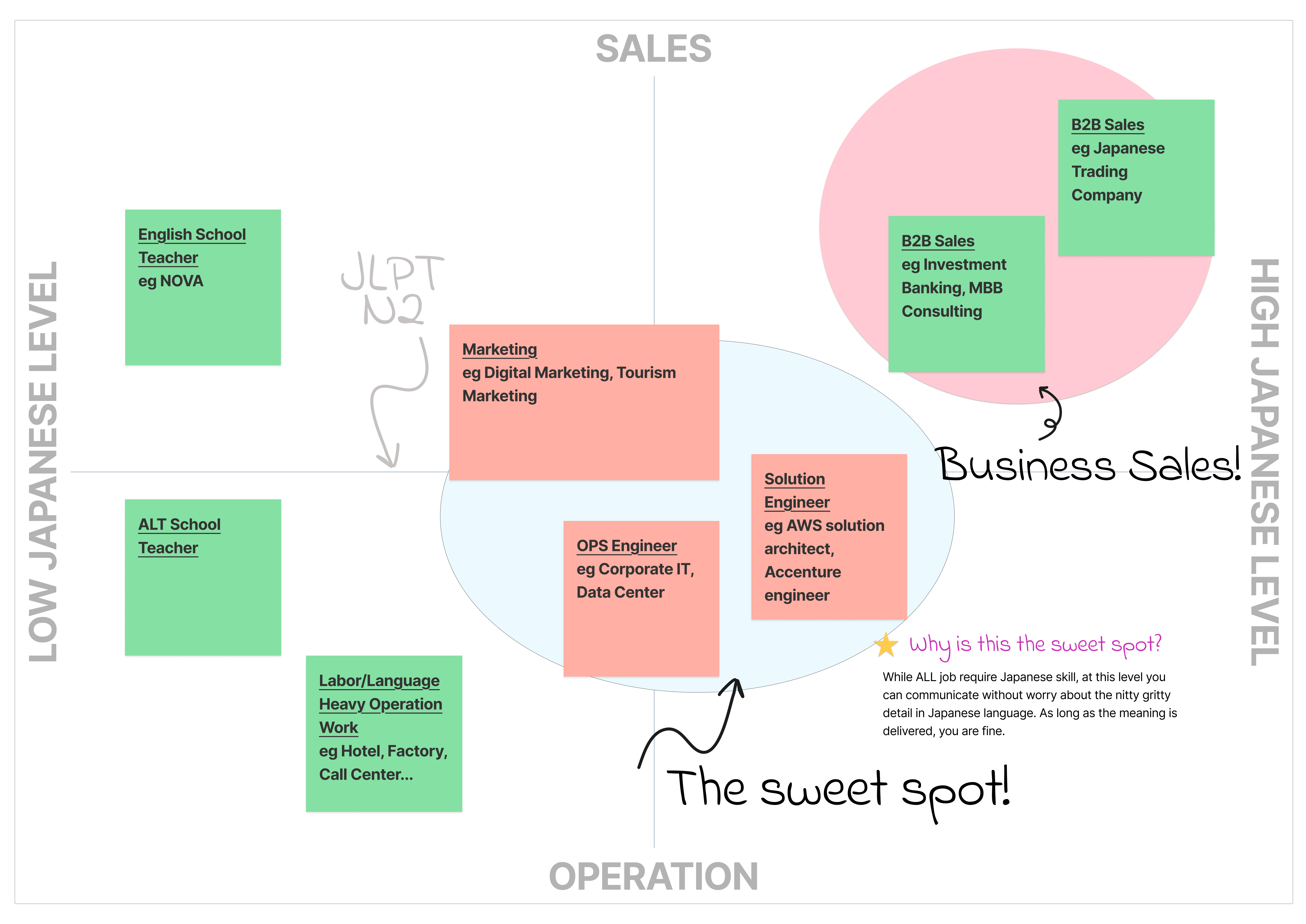
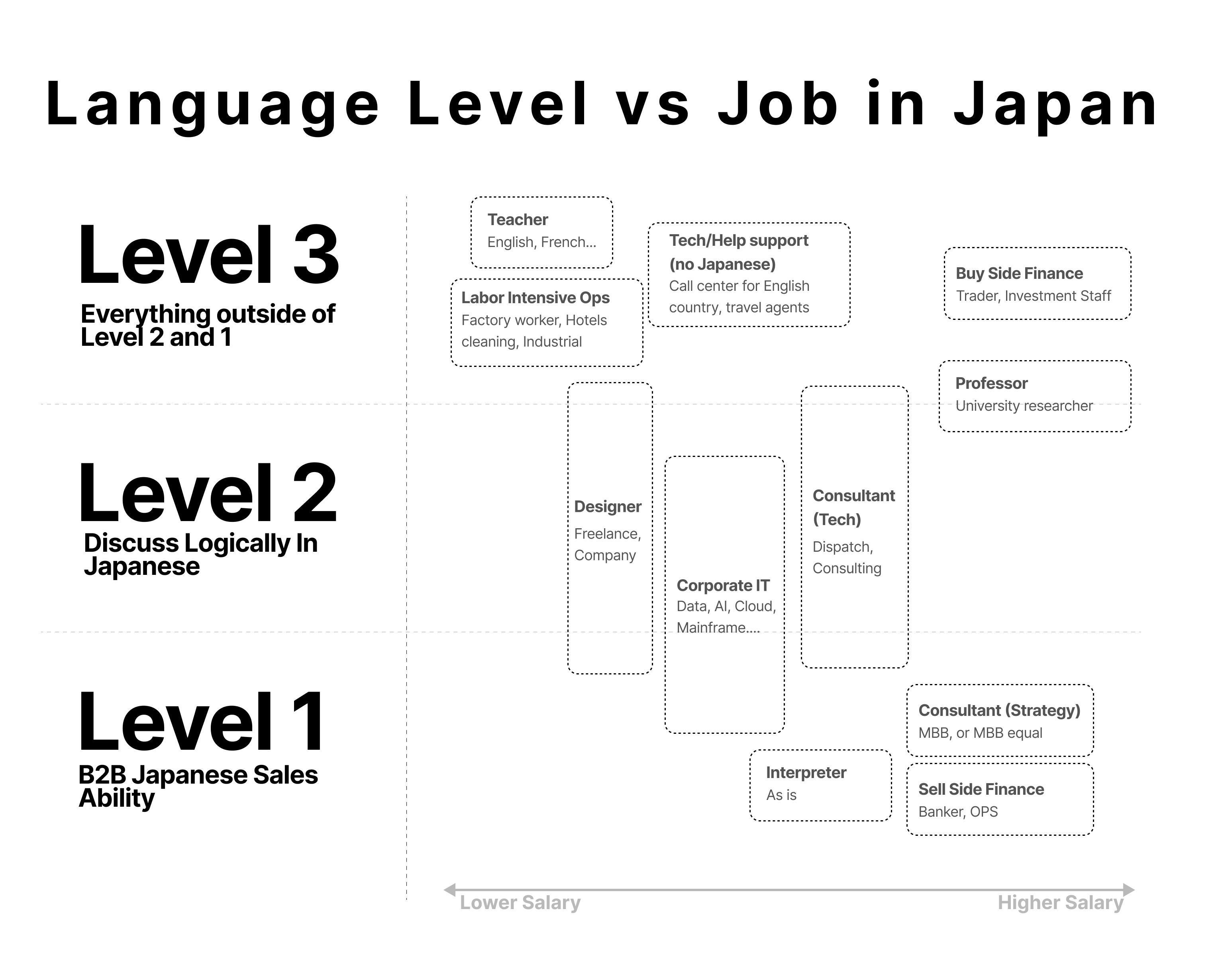
The Three Levels Explained
Level 1: B2B Sales Japanese
This is the highest level of Japanese proficiency required. These roles involve:
- Direct client-facing responsibilities
- Business negotiations in Japanese
- Sales presentations to Japanese companies
- Building relationships with Japanese stakeholders
Typical roles: Sales, Business Development, Account Management, Client Success (for Japanese clients)
What it means: You need to be able to persuade, negotiate, and build trust entirely in Japanese. This goes beyond JLPT N1 - it requires business communication skills and cultural understanding.
Level 2: Office Japanese (N1+)
This level is for internal communication within Japanese companies. You'll need Japanese for:
- Team meetings and discussions
- Internal documentation
- Collaboration with Japanese colleagues
- Day-to-day office communication
Typical roles: Product Manager, Designer, Marketing (internal focus), Operations
What it means: You can function in a Japanese-speaking office environment. While the company may be international, most internal communication happens in Japanese. JLPT N1 is usually the baseline expectation.
Level 3: Basic/None (English OK)
Many companies in Japan operate primarily in English, especially:
- Global tech companies with Japan offices
- Startups with international teams
- Engineering roles at English-first companies
Typical roles: Software Engineer, Data Scientist, Designer at global companies
What it means: English is the working language. Basic Japanese is helpful for daily life but not required for work. Some companies are fully remote with no Japanese needed at all.
Which Level is Right for You?
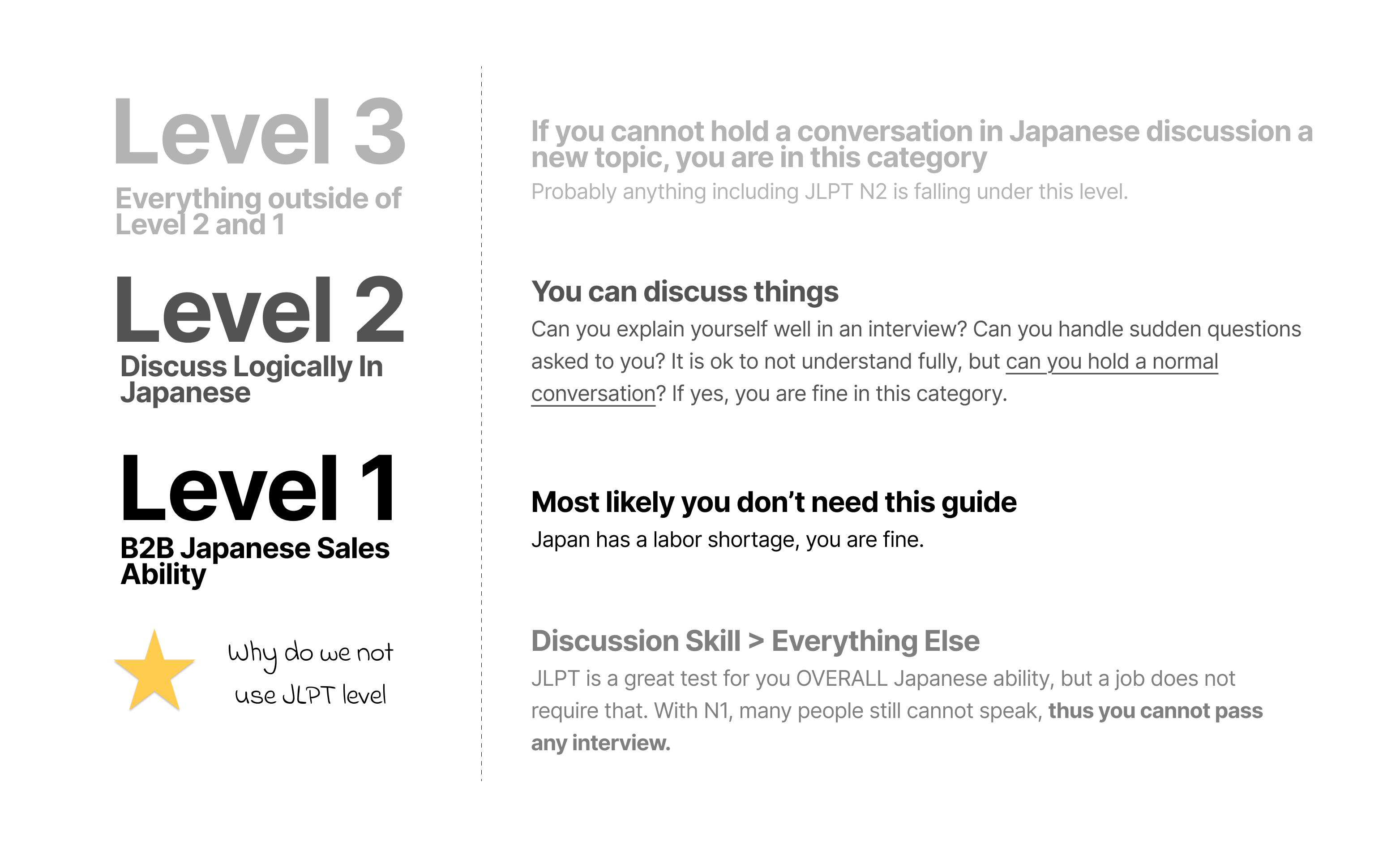
If you're just starting to learn Japanese: Focus on Level 3 (Basic/None) roles. There are plenty of engineering and tech positions at companies like Rakuten, Mercari, and various startups that operate in English.
If you have N1 or strong conversational Japanese: You can explore Level 2 (Office Japanese) roles. This opens up more positions at Japanese companies that want bilingual talent.
If you're fluent and have business experience: Level 1 (B2B Sales Japanese) roles typically offer higher compensation but require proven ability to work with Japanese clients.
Open to Career Changers
Some jobs are perfect for people looking to switch careers - transitioning from English teaching, hospitality, retail, or other industries into tech, sales, or corporate roles. We mark these as "Open to Career Changers" because these employers are willing to train you and value transferable skills like:
- Communication abilities
- Language skills
- Cultural adaptability
- Customer service experience
Don't let your current industry hold you back. Many successful professionals in Japan started as English teachers and transitioned into tech, sales, or operations roles.
Use our filters to find jobs that match your Japanese level and career goals. Good luck with your job search!